
Subscribe to:
Post Comments (Atom)
About Me
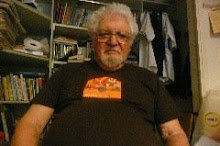
- artpearl
- Art Pearl has been around for a while He has taught at New York University, Howard University, Oregon University, University of California Santa Cruz and Washington State University Vancouver. He also has taught in California prisons and was Director of New Yorks’s Division for Youth He was a principal speaker at the only White House Conference on Teaching the Disadvantaged.. He was also a member and chair of the National Institute National Institute for Teaching of the Disadvantaged He ran for governor of Oregon and Oregon lost He was elected three times to the Santa Cruz Board of Education, the second time with the highest vote ever recorded. He has been given a Martin Luther King, Jr. Lifetime Award And an award from the University of Oregon for his work in advancing social justice
55 comments:
The following link is to an article from The Center for Civic Information and Research on Civic Learning and Engagement (CIRCLE).
http://www.civicyouth.org/PopUps/WorkingPapers/WP59Kahne.pdf
Summary - although we want our students to be more involved in civics, the opportunity to be involved is generally limited to successful white students and limits the opportunities for minorities to be involved.
This study shows that schools are frequently providing fewer opportunities to involve minorities in civics, widening the inequality in education.
Your thoughts?
Mike McGee
I am not sure exactly how to do this so I am just posting this as a comment.
Here is a link to the article that I am presenting.
http://www.civiced.org/pdfs/germanPaper0905/PoliticalEducation0905.pdf
Political Education Beyond National Borders
Teaching democracy abroad to promote more peaceful international relations
Alden W. Craddock, Ph.D.
International Democratic Education Institute
Bowling Green State University
Presented at the
Responsible Citizenship, Education and the Constitution Conference
Freiburg, Germany September 11-16
http://bgsu.edu/idei/
•“The classical liberal viewpoint assumes that as different peoples engage in mutually productive trade they will be less likely to engage in severe conflict…Some have even argued that such interactions are not only beneficial to peacefulness but even a necessary condition for the spread and development of civilization itself. (Diamond, 1999)” (p. 2).
•“Samuel Huntington (1993) in his instant classic, “A Clash of Civilizations”…Huntington contended that as the world becomes increasingly interconnected, the greatest divisions among peoples, and the source of most international conflict, will be based on culture. From his perspective, in a less connected world, these cultures could co-exist in semi-isolation…” (p. 3).
•Research has discovered democracy is the answer. Democratic societies are less likely to wage war against other democratic societies. Democracy pacifies.
•Given that a more peaceful interconnected world was the goal of policymakers and that spreading democracy was the key to this achievement, it remained for policy makers to select the means by which they could achieve their desired result.” (p. 7) Military or Peaceful Education
•The biggest task is “convincing the people of a given country of the worth and importance of democratic principles” (p. 7)
•How are we educating? Overt and Subliminal Ways. Informational Broadcasts, Non-Governmental Organizations, Open and Effective Elections, Free Press, and targeting educational systems. (p. 8)
•The goal is to promote democracy but not to actively politically control other nations. (p. 9)
•Will this end War or is it another form of oppression? Is this us forcing our ideas onto other cultures for our own financial gain? What do you think about this?
Angy Richards
http://www.civiced.org/pdfs/germanPaper0905/PoliticalEducation0905.pdf
Sorry, here is the link again. The last one got chopped off
I really like the quote in this article, "What makes an American is their core beliefs in core principals of US democracy and not their ethic background." I all cultures work together to make democracy. I don't feel anyone is forcing anything on anyone. It is your own personal choice to have the same views, ideas, or beliefs as someone else. Difference are and showed be considered and/or respected in a democracy.
Opps that last comment was from Amber Fortner
I think the article makes two VERY intersting points. First, that trade between nations reduces likelyhood of aggression, and second, that democracy pacifies - that one democratic nation is much less likely to wage war against another democracy. The former argues for free trade and materialism, the latter for legitimate authority, inclusion, and equal encouragement.
Scott Morris
I continue to read/ponder about the quote "The danger is that popular uprising will overthrow a Westernized elite or otherwise install a non-democratic leadership through a democratic process."
How much is this present in our current government and those labeled as a "democracy" throughout the world?
Mike
Comments on the chapter. . .
I am usually a little confused as to how to put the ideas discussed in class and in the text into practice, especially in my K-2 special education classroom, but while reading chapter six I could continually see I could implement the problem solving approach to curriculum in the classroom. Unfortunately, all of my visualizing was occurring in middle and high school classrooms. I have seen that many of the components of democratic education- working for a purpose for example- can be tailored to meet the needs of my students and increase their participation and learning in school activities, but in class and peppered throughout the text are examples of how to build a democratic classroom in the upper grades with a emphasize of building the ground work at the elementary level. “In the early years, the teacher is the unchallengeable authority and explains the logic of the justice system, the primacy of rights, the workings of a due process system, the limitations on punishments, and the necessity of meeting the criteria of fairness” Pearl & Knight, 1999, p.208).
While reading this chapter I kept thinking how well these “lessons” would fit into a health class- I couldn’t help from designing group activities, research assignments, class discussions, and reflection assignments after they had implemented their plans for my imaginary class. Reading this chapter almost makes me want to teach middle school so I can see how a true problem solving curriculum would play out. I would love to work through the problems discusses in this chapter with a group of adolescents. It ties very closely with what I observed when I was a substitute teacher is the curriculum for middle school health classes- at least the subject content. The layout of the syllabus would be completely different of course, but a teacher could probably implement a problem solving curriculum in this subject area without offending too many administrators and still cover the required GLEs (likely in much more depth and with greater retention). The problem solving approach with students in the role of problem solvers instead of the current top down models, that are currently having such phenomenal results to reduce violence and abuse, seems like a logical way to educate students about drugs, sex, violence/safety, and discipline. By having students research the actual effects of drug use, engaging in sexual activity, violence and the current and responses by governments to their use, they can make informed decisions as to how to conduct themselves instead of the current practice of compliance or creation of counter cultures.
When students have the opportunity to investigate a problem that does not have a known solution they have the opportunity to be empowered and not only think for themselves, but are armed with evidence they can use to engage in debate and influence others. The government, parents, teachers, etc. have tried for decades to reduce violence in schools, unsafe sexual practices, and drug abuse and have yet to solve one of these problems. Many would argue they have all gotten worse. By giving the power to the students (who currently have it unacknowledged anyway) they may be able to positively impact these and other “problems” adults have failed to solve.
My question is: How do we create a democratic classroom in the primary grades?
Amber- In your post you commented, “all cultures work together to make democracy. I don't feel anyone is forcing anything on anyone. It is your own personal choice to have the same views, ideas, or beliefs as someone else.” Some cultures and counter cultures, such as those listed on page176 and 177 of our text, do not support democracy, which is ironic because isn’t it because we are a democracy that individuals/groups can express dissenting opinions and “personal choice” (as you said) not to support such a democracy? I don’t think that all cultures work together to make democracy per say, but that most cultures could be represented in a democracy, especially with active debate between opposing sides of controversial issues.
About rights- In Art's talking points email, he quoted -Tinker v. Des Moines 1969- Tinker wore a black armband to protest against the Vietnam War. Tinker was then expelled, and the parents took the case to court. The decision was in favor of Tinker, saying he was not disrupting school practices. This brought to mind the policies of dress code (thin shirt straps, short skirts on girls, and underwear showing above boys pants) and public displays of affection (pda) that are addressed in the student handbook at our school. Although the statement is different than that of Tinker, clothing and actions are statements nontheless. Students have been sent home to change clothes that were deemed indecent by administration, and students have been talked to and issued threats of calling parents for pda. I wonder how different these two policies would be if it were a democratic school. Would the students decide that conservative dress is appropriate and pda is inappropriate? I'm not sure. Are skimpy clothes a distracion at school? It seems like students who are attracted to one another are distracted no matter what the other is wearing. On page 225 of the text Pearl and Knight state, "Freedom of expression is not a settled matter in public schools, nor in any aspect of public life. still unresolved are students' rights to express orally unpopular opinions in school, the right to symbolically express an opinion through dress..."
For now the handbook as approved by the school board is what is in use. If the students organize and adopt a different set of rules, I suppose it all could change.
Cindy Pittman
This is in response to Angy's article. The quote that follows:
•“Samuel Huntington (1993) in his instant classic, “A Clash of Civilizations”…Huntington contended that as the world becomes increasingly interconnected, the greatest divisions among peoples, and the source of most international conflict, will be based on culture. From his perspective, in a less connected world, these cultures could co-exist in semi-isolation…” (p. 3).
Isn't this what happened eventually in pockets of places like New York? They had the Jewish neighborhood, the Italian neighborhood and so on. These people had a lot in common, but ended up living in semi-isolation. This doesn't seem right, however its been happening right here for years. That's why it is so important to teach our students about tolerance?
So how do you teach your students about different cultures and tolerances?
Denise Choate
This is in response to Denise's question... What do you do in your classroom to teach about differnt cultures and tolerance?
In my own classroom, I have students share about their own culture and traditions. I do this through my star student. We celebrate a particular student for a week and learn about them. I have questionair that asks things like where were you born, were is your family from, share a special family tradition, etc... The student makes a poster to go along with the questionair. I also have students take home a homework assignment on their family and tradtions that the students share with the class. I also use literature and activites to teach about different cultures too. For teaching tolerance I use the 2nd Step curriculum, which teaches students how to be work together and to be tolerant of each others difference. I hope this helps.
Amber Fortner
This is in response to Denise's question about tolerance.
We have many activities built into our classroom curriculum. One that we just finished is reading about Caesar Chavez and the lives of migrant workers. For a final project, 1/2 of my class plays the role of the farm owners and 1/2 plays the role of migrant workers. They then have to negotiate what each side wants, making concessions when needed and finding a way that both parties agree. Like I mentioned, this is just one activity but since we just did it thought I would mention it to you.
Mike
Wow I really like Mike's idea of teaching tolerance with half of the class as farm owners and the other half the migrant workers. This would really help students see other points of view than there own. They will have to know learn them in order to persuade the other group. I think that this is a great way to teach tolerance in the classroom and help them see other points of view!
- Eileen Walsh
I am an assistant in a special ed preschool classroom. I would like to know, what are some ideas for teaching tolerance in the very young grades such as preschool? How do you introduce such a complex topic to three to five year olds?
Thanks!
- Eileen Walsh
Interesting article Angy. I think it stresses the important of this class. It talks about a democratic classroom contributing to world peace, we all want that. I think the tougher question is how to promote a democratic classroom without the supports in place such as administrative support.We have so much emphasis on performance and standards, we are forgetting about importance of producing active participating citizens in this country. We have along way to go.
Sue Johnson
I found a great article which I am sharing in class regarding democratic understanding in Primary School. It describes work in the United Kingdom to establish children's undersanting of their own "citizenship" in the school itself. They have some excellent activities to see the level of thinkingm in the primary grades. I was scheduled to share last week, but didn'tget the message class had been moved until too late. I will bring the article for everyone next week.
Sue Johnson
In response to Mike, in almost every possible way a larger percentage of minorities are being denied opportunities for inclusion- educational achievement, employment, access to political power, etc.. For those of us in education and interested in democracy, we need to be sure we encourage all in our classrooms, but also provide them with the understanding of democracy that they will go forth and do the same.
WE DO THIS NOT JUST BECAUSE IT IS THE RIGHT AND JUST THING TO DO BUT ALSO TO KEEP THE HARD FOUGHT PROGRESS TOWARD A DEMOCRACY THAT WE HAVE OBTAINED
ART
Response to Angy
Have little kind words for Huntington, who has been been pretty thoroughly discredited by many, many others. However, the argument presented is a valid one. How is democracy to be maintained and advanced? The obviopus answer is by its advocatess that not only speak for it but in many ways demonstrate it. War not only doesn't advance democracy, it effectively undermines it, breeds, anger, resentment and desire for revenge.
For those that insist we won that war, I would ask how did that victory advance democracy in Iraq or at home? Remember bringing democracy to Iraq was the ultimate justification for the war. And that goes to one of the questions asked. How is democracy advance- military or by peaceful means.
and answering another question, how other than education can people learn about democracy?
Art
Response to Amber
"makes an American is their core beliefs in core principals of US democracy and not their ethic background."
That is nice sentiment. Where is the evidence for it? We have experienced serious attacks on those principles periodically and while it is true we have always survived. More importantly many cultures not only were excluded from the definition of American, it has been the war on cultures that ultimately led to the inclusion of women, African Americans, labor, etc. into the political community as imperfect as it has been me.
Art.
Response to Cindy
How would students respond if given the opportunityh toi determine dress codes is a very good question. We will never know until students are given that opportunity. In the few instances they have, they turn out to be more conservative than the adults. Which opens up opportunity for discussion which is the core of any democracy.
Art,
I agree with your statement regarding on teaching democracy because we can't give up on the progress we have made. However, it appears that our current educational system does little to involve minorities in all aspects of education, especially civics and often times appears to be going backwards, not forwards.
How do you feel we, teachers, can effectively act as agents of change, not only in our classroom but outside of it as well to make the needed changes across the entire educational system?
Mike
Response to Scott
I think he makes very solid points about the value of trade and democracy. Trade between nations CAN and should reduce likelyhood of aggression. However the intent of trade should be for mutual benefit to both countries. If trade is solely for suppressing wages, it loses much of its benefits and could be a major contributor to economic collapse Scott's second point, that democracy pacifies - it most certainly does. Now the trick is to get democracy understood.
Art
Response to Mike
Is there danger is that an non-democratic government would be overthrown through a democratic process? And further raises question would our current government would be accepted as a "democracy" throughout the world?
We are not recognized s a democracy, however, almost all the world hailed the election of Obama as a sign that we have reconverted to democracy. Whether that is true will depend largely how well we get people to understand what democracy really means.
Is there likelihood that a government could be overthrown by democratic means. Highly unlikely. But could it be overthrown on the claim of democracy. That is very possible. Which of course depends on widespread is understanding of democracy.
Art
Response to Scott
I think he makes very solid points about the value of trade and democracy. Trade between nations CAN and should reduce likelyhood of aggression. However the intent of trade should be for mutual benefit to both countries. If trade is solely for suppressing wages, it loses much of its benefits and could be a major contributor to economic collapse Scott's second point, that democracy pacifies - it most certainly does. Now the trick is to get democracy understood.
Art
If don't establish understanding of rights early are likely to find that sResponse to Elizabeth
My question is: How do we create a democratic classroom in the primary grades?
It all begins in the early elementary grades
Effort to establish legitimacy. Some students enter school opposed to the teracher authority
Exclusion begins early and takes its toll.
Never too early to get students to discuus world happenings and think about posdsible solutions.
Developing rudimentary student government should begin in 1st grade
Never too early to understand rights
Optimum learning environment in early grades lessens the impact of problems down the line
Never too young to think about equality
Art
This is in response to Denise's question... What do you do in your classroom to teach about different cultures and tolerance?
In my middle school science classroom, I have some difficulty finding ways to bring in cultures and tolerance. There seem to be many different variations of religious explanations for scientific phenomena that I really don't want to discuss or bring into the classroom. The best way that I have found to bring a cultural piece into my classroom is to try to represent as many cultures as possible in the examples that are presented in the classroom. These usually are movies/video clips, current events, or guest speakers that bring issues into the classroom that might affect us differently. I have found some of the best discussions in my class take place when discussing new or unique current events and discoveries.
response to Denise
So how do you teach your students about different cultures and tolerances?
Really very difficult and probably should not be attempted.
What is possible is create a classroom where there is sufficient trust that students take on a multi-cultural education. As students feel sufficiently protected and the school has sufficiently built into students a sense of security, students will take over the sharing of culture
Art
Denise's Chapter •Question: When developing your classroom rules do you have your students develop those rules with you in a democratic way or a different way?
This year I had my students create the classroom rules. (2nd grade) First I had individual studnents write down a rule they feel is important. Then we came together and wrote down all the rules. After we came up with a list we looked closer combined rules to fit in other areas. Like no hitting can fit in with keep hands and feet to yourself. We came up with 6 class rules. Each student signed the rules. When a student has misbehaved I have a reflection sheet that they state what rule they didn't follow and what they will do next time to follow the rule. They also reflect on if their choice was safe, postive and supportive of the learning environment.
Amber Fortner
This comment is directed at the reading and Art's comments on rights in the classroom. I have been interested in having my classes form their own “rules” and consequences for some time. I have tried it in the past, but it really didn’t stick. In retrospect, I remember that the ideas were mainly introduced by me. The class participation seemed to be restricted to those that normally participated, and it seemed difficult to get everyone’s opinion. We settled mainly on some rules and punishments that not everyone upheld.
I like the idea of focusing on the rights. A good way to start the discussion would be to look at the school imposed rules and determine what rights each students actually had. Hopefully they would mention such noble topics as “the right to learn,” or the right “not to get beat up.” From here we could branch out and discuss what would signify a breach of these rights. Working our way through their rights make much more sense than discussing standards. This should help the students feel a sense of security and shared community.
Response to Denise
So how do you teach your students about different cultures and tolerances?
It begins as all of democrat dioes with discussion, the teacher as moderator but also referee, establishing boundaries and ground rules
Art
Response to James
found some of the best discussions in my class take place when discussing new or unique current events and discoveries.
I think that is as good as way as any, and maybe the best way to get meaningful discussuions.
The more the classroom deals with the real world, the experienced world, the known world, the more there is likelihood of real understanding of the others in the world.
The problem is that it doesn't happen enough nor is there sufficient emphasis on understanding , the expansion of knowledge
Art
Response to James
It is important that students find a way to link their understanding of "rights" to the Bill of Rights. Students need to understand how important to the survival of US democracy was the Bill of Rights and without them we would not likely be the longest surviving government.
Limking student rights to the Bill of Rights accomplishes two things-
1. it provides a grounding for school democracy and the protection of the individual
2. It brings reality to somethiong vaguely understood
The critical issue is to seperate rights from responsibilities.
Students comne with rights
We teach them responsibilities
Art
Responses to Sue
I agree we are letting obsession wit tests to deflect attention away from preparation for citizenship
Art
Amy, Darin and Sherra where are you?
Art
In response to chapter six, over the past few years I have switched to having students solve the problems of our class whenever possible, either through the use of weekly meetings or having them reflect on the various concerns they have with what is happening in our classroom. Although it is far from perfect, I have found that when I give students more ownership in the curriculum (what should be assessed based on what we have learned, etc.) and discipline issues, the outcome is usually more meaningful to the students and results are longer-lasting.
Mike
In response to Denise's question: So how do you teach your students about different cultures and tolerances?
In my 3rd grade class last spring each student made a poster about their culture with their families at home and then presented them to the class. We also “visited” each continent and learned about additional countries and their cultures through books, a video, letters from my pen-pals in Kenya, postcards, songs, websites created by Australian elementary students, food, math games, readers theater, etc.
Elizabeth Tindall
Art,
You said, "But could it be overthrown on the claim of democracy. That is very possible. Which of course depends on widespread is understanding of democracy" in your response to Mike. Could you expand? I'm not sure what you mean.
Elizabeth
Ellen where are you?
Art
I'm right here Art!
When I was reading Denise's chpt. 6review I kept thinking about the questions she was asking along with the questions and comments I had from reading the chapter. Classroom management is something I am constantly working on year after year. What I have found is that classroom management is much easier when you give the students control of solving their own problems. The problems tend to not happen as much, or if they do we can sit down and I can hear them out.
One thing I have noticed is that giving students choice is quite foreign to most of them. I have a student that hasn't had me before (most of my students I have had since 1st or 2nd grade) and when I ask him to challenge me or other students(which he loves to do) he was quite wary at first. Challenging an adult had not worked for him in the past. However, working through how to respectfully prove me/others wrong has worked wonders with this student. He thinks through what he is going to say, he knows how to back his facts up now, and he is respectful when he is talking not only to me but to others in the room.
As far as classroom rules go I think we need to be consistent and let the students work through their problems. We need to keep in mind that discipline is not a one size fits all model.
Sherra Fink
I am late to the posting.
While I was reading Sherra's post I was thinking of my classroom manegement and agree that it is an area i work on each year and do understand that it is not a one size fits all but I still struggle. As I read chapters 6 and 7 I was struggling with how to use it with my students. I am sure it can be done I need to do some reflection and more research. Chapter 6 is using real problems in the classroom and having students come to their own conclusions. Where is this for the 5 year olds. Are there other problems that I should be using for my students? As for chapter 7 I do understand that my students come in to class with rights.I can see how this will be easier for me incorporate into my classroom. I think I will need to do more research and much more reflection about my daily procedures and practices but this will be something I feel I can do that will allow the students to take more control of the classroom and of their own behavior.
Picking up next morning
Response to Elizabeth epaining
"But could it be overthrown on the claim of democracy. That is very possible. Which of course depends on widespread is understanding of democracy"
Everybody claims to be democratic. China is the People's Democracy of China. In the 1930s Hitler rose to power on the claim of national socialism. We went to war in iraq for freedom. As democracy becomes more and more an empty slogan, and very few peopl have any understanding of the principles on which a true democracy is based and during times of extreme crisis, it is very possible for a democracy to be overthrown by those claiming to be a better democracy able to restore the economy and bring about domestic tranquility. It came very close too happening here in 1934 with Smedley Butler. It could happen agains depending how severe this economic downturn is
Response to Mike
Mike you might be pleased to know according to a US Congressman, Caesar Chavez is alive and well and in charge of Venezuela
Caesar Chavez endorsed me when I ran for governor of oregon and Delores Huerta remains a close friend.
On more serious note, I applaud the ways you are introdcuing the cultural worlds of others. the more real it is the more effective the lesson. With Chavez religion played a very important role
Art
Response to Amy
With 5 year olds you cannot impose on them world problems. That would be overwhelming and counterproductive. You use the problems tthat emerge in the school or class. Very young children have issues with fairness. They will tell you whatt is not fair. There are issues of bullying, possessiveness, usurping time and space, etc, These become the basis for drawing young students into discussion and ownership of rules. Vygotsky argues that with young children itis play that gets them connected to rules and children get very upset when some one arbitrarily tries to change the rules that govern their play. It is with THaT SENSE THAT CHILDREN CAN PLAY IMPORTANT ROLES IN THE ESTABLISHMENT OF RULES IN THE CLASSROOM. THE EARLIER ONE CAN GET STUDENTS TO UNDERSTAND THE FOUR BASIC RIGHT IN OUR BILL OF RIGHTS, EXPRESSION, PRIVACY, DUE PROCESS AND MOVEMENT, THE BETTER. THIS IS PARTICULARLY TRUE FOR FIRST AMENDMENT RIGHTS, WHERE TOO OFTEN AND TOO EARLY CHILDREN BELIEVE THEY HAVE THE RIGHT TO CALL OTHER STUDENTS NAMES OR USE RACIAL EPITHETS.
Sorry about capitals
Art
Response to Sherra
There are really two reasons to establish a democratic base for discipline in which both justice and rights are maintained.
1) it makes for a much better, far less disrupted classroom
and
2) it provides an understanding for what our adult justice system should look like
Fair to all and with a social good its goal. Our justice system now is a mess. Unjust, a Rush Limbaugh gets away with what a poor black person gets 15 years in prison for. More people in prison tha any other country in the world.and virtually no provisions once released,
If oone size doesn't fit all in elementary school should it fit all in adult life? If not, how does a justice system work.
It is essential that school life be connected to what's happening in the world outside. Otherwise, students go out into the world unprepared for what they will meet. Actually many mmeet it everyday before, after and in some ways during school
Art
So now you have me thinking Art...perhaps we use the justice system model (a good one if we can find it) to help guide our rules and discipline issues w/in our schools. Would that be working more towards a democratic school?
I keep thinking about the student w/ down syndrome that was expelled becauase he brought a knife to school (I can't remember why he brought it to school but I do remember that expelling him was not what needed to happen). Is zero tolerance really the way to go? I'm thinking we should have more of a trial system. Any thoughts?
Sherra
Of all the topics discussed in chapter 6, the one that both intrigued me and puzzled me most was the issue of “A Democratic Approach to Serious Delinquency” on pages 218-219. I agree with the statement that reads “schools create delinquents by denying students opportunity for success in schools while pushing them to the gratifications that delinquency provides.” So much of what we have learned this semester has dealt with the credentialist society and the exclusion of students in a variety of ways. Oftentimes it feels like we push those students away who need the safety and stability of school most. When students turn back to their delinquent behavior instead of turning to school, it may be too late. I also agree that we need to do a better job of the following: “As soon as a student begins to fail a class, extra effort should be made to establish contact with that student and negotiate with him or her a new education plan.” My confusion lies in what these type of plans might look like and how can they be created. It goes on to say on 218 that in a democratic classroom “students will design plans to reincorporate students who have slipped out of the mainstream.” While I like the idea, I am having trouble visualizing how this works? Students create plans for other students? What is the teacher, parents, administrator’s role? I like the idea of an “incident- free return,” but what does that look like.
Here are my thoughts on Art’s discussion of rights. I found it interesting that a democratic classroom has four basic rights (expression, privacy, due process, and movement) and there also happens to be four ways in which those rights are endangered (ignorance, neglect, hysteria, proliferation). Kind of ironic. I don’t think I am going out on a limb by saying that most students understand more about what rights they don’t have compared to the rights they do have. This in large part is probably due to the latter four reasons listed above. Students are so used to being treated undemocratically that most do not realize that their personal rights in many cases are being denied. While reading about expression, privacy, due process, and movement, I found myself thinking about the various times when I have denied my students rights they should have been afforded. That can be a tough mirror to look into. My attempt now will be to consider more closely how my decisions affect my students’ rights. But, as is discussed toward the end of the power point, it is important to keep in mind that there are limitations to rights. It is up to me, the strong adult influence in the class, to help students understand, use, and protect their rights.
Darin Gardner
Post a Comment